
Our Blog
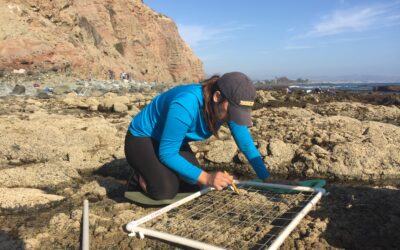
MPA update: Observing the space between land and sea
California researchers spend hours crouched over rocky intertidal zones across the state, piecing together how best to protect marine life.When 11 million gallons of crude oil spewed from the Exxon Valdez oil tanker into the frigid waters of Prince William Sound,...
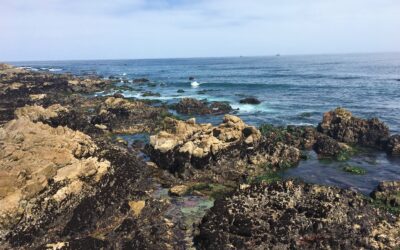
Exploring California’s Marine Protected Areas: Pacific Grove Marine Gardens State Marine Conservation Area
The Monterey Peninsula is famous for its scenic views and amazing wildlife. Along the coastline, in the city of Pacific Grove is a beautiful place that exemplifies these features called the Pacific Grove Marine Gardens State Marine Conservation Area (SMCA).This marine...
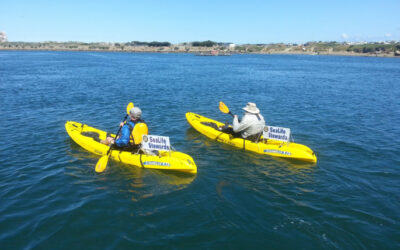
Otters and Online Lessons: The San Luis Obispo Marine Protected Area Collaborative
Diverse marine habitats are a hallmark of California’s central coast region, from sandy beaches and dune landscapes, to expansive estuaries and dense kelp forests. Many are safeguarded by state marine protected areas (MPAs), which aim to protect the abundance of...
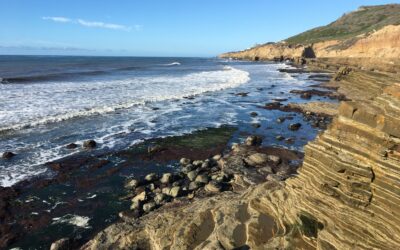
Exploring California’s Marine Protected Areas: Cabrillo State Marine Reserve
If you’ve never been tidepooling, the Point Loma tidepools in San Diego are a good place to start. These tidepools lie within Cabrillo State Marine Reserve (SMR) and Cabrillo National Monument, just a short drive down the hill from the national monument’s main...
Sonoma Marine Protected Area Collaborative: Connecting Land and Sea
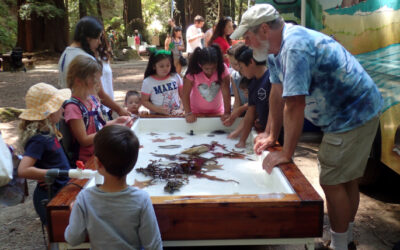
Sonoma County offers some of California’s most iconic landscapes, from towering redwood trees to rolling hills blanketed by vineyards. The Sonoma coast is no exception, with sweeping views of crashing waves that shape the offshore, rocky sea stacks and mossy forests...
Exploring California’s Marine Protected Areas: Cambria State Marine Conservation Area
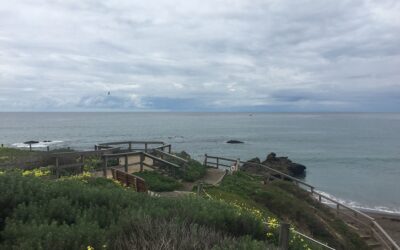
Along Highway 1 nestled between the cities of San Simeon and Cambria in San Luis Obispo County is a 5.8 mile stretch of beautiful coastline and the Cambria State Marine Conservation Area (SMCA).
MPA update: Monitoring California’s iconic kelp forests
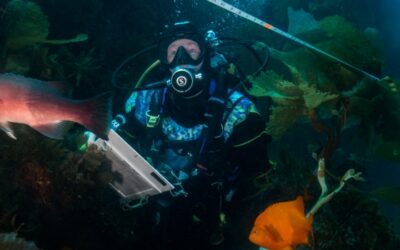
Some of California’s most important forests don’t have trees. Up and down the West Coast, kelp—a large, plant-like brown algae—supports marine life and local economies.“It’s really quite an iconic ecosystem,” says Mark Carr, a kelp forest ecologist from UC Santa Cruz....

Teacher Toolkits and Tribal Traditions: The Humboldt Marine Protected Area Collaborative
Humboldt County is home to some of the most remote marine protected areas (MPAs) in California. The county’s eight MPAs and two special closures are a part of the larger statewide network of 124 MPAs, managed by the California Department of Fish and Wildlife...
Stay home, save lives, and stay busy with these resources
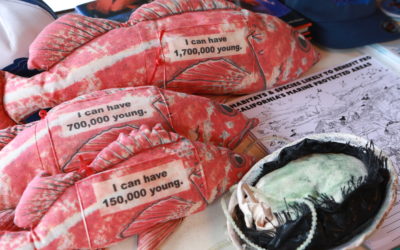
The MPA Collaborative Network wants to share your resources, products, and programs with our Statewide Network. In a time when everyone is sheltering at home, schools are closed, public events are canceled, and you have to maintain at least six feet of distance from...
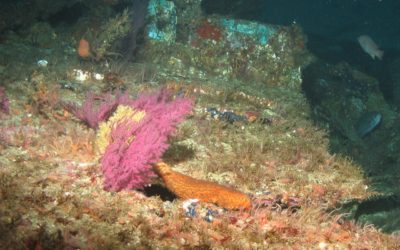
What is cooler than a cucumber – a sea cucumber!
Author: Natasha Benjamin, Marine Research and Exploration (MARE) March 2020Sea cucumbers are an important component of the sub-tidal zone, feeding on benthic waste and recycling nutrients. They are the “earth worms” of the seafloor. Similar to other sea cucumber...
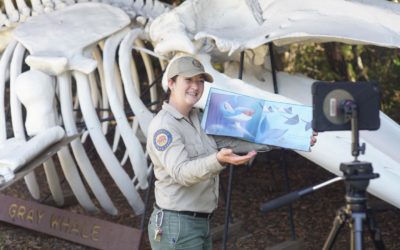
MPA Outreach and PORTS Home Learning Programs
California State Parks' MPA Outreach and Education Team were ready to hit the ground running in response to recent school closures. Funded by the Ocean Protection Council, the MPA Outreach and Education Project has been providing "traditional" in-park MPA educational...

University of Michigan Graduate Students Team Up with the MPA Collaborative Network
The University of Michigan School for Environment and Sustainability (SEAS) is teaming up with the MPA Collaborative Network! Under the guidance of Project Advisor (and MLPA expert) Steven L. Yaffee, Masters of Science Program students Kimberly Guo, Julie Hassen,...